




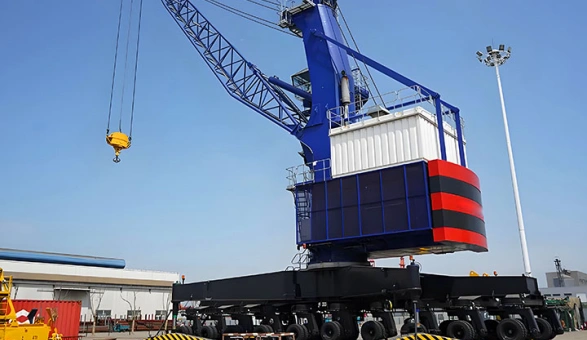
If you work in heavy industry, shipbuilding, or large-scale logistics, you have likely seen a massive structure moving along rails, carrying containers or bulk materials with ease. This equipment is known as a portal crane.
In this comprehensive guide, we will answer the question "What is a portal crane?" , explore how it differs from similar lifting equipment, and discuss its critical role in modern industry.
What is a Portal Crane?
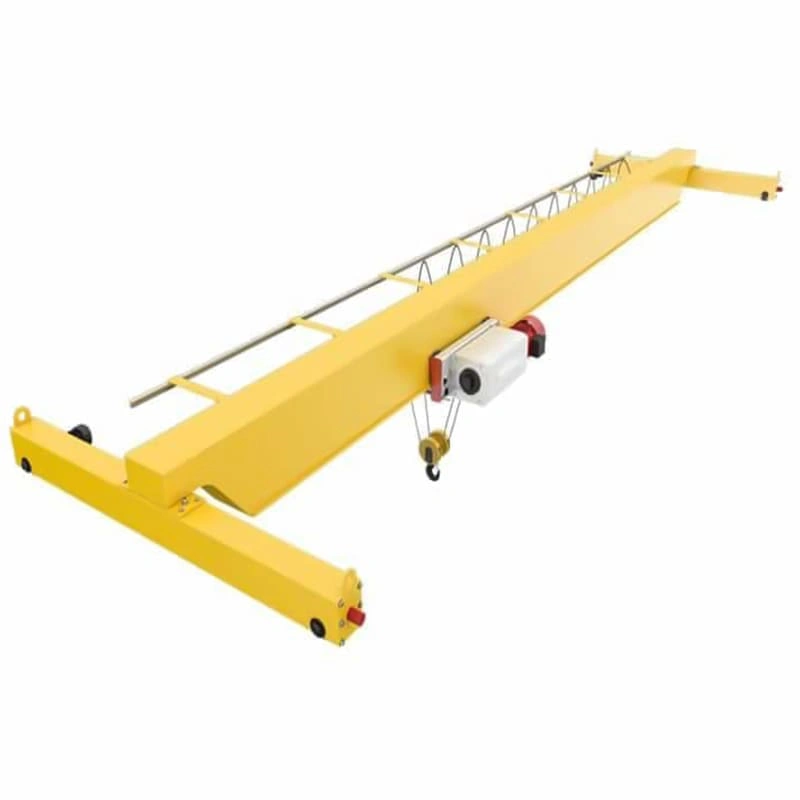
A portal crane, also known as a gantry crane (though there are subtle differences), is a type of crane that consists of a hoist or trolley supported by a structural frame (the bridge) that is supported by legs mounted on wheels or rail trucks. Unlike an overhead bridge crane that runs on elevated runways attached to the building structure, a portal crane runs on ground-level rails, allowing it to span large areas without requiring a permanent overhead support structure.
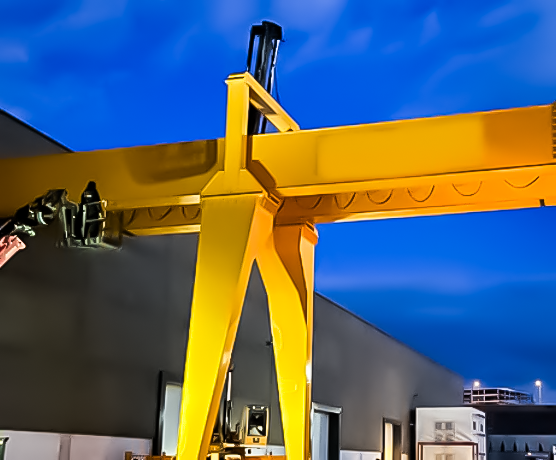
The defining characteristic of a portal crane is its portal frame—a rigid structure with two legs (or more) that travel along a track, creating a "gate" or "portal" through which vehicles, trains, or ships can pass.
How Does a Portal Crane Work?
The operation of a portal crane relies on three primary movements:
Hoisting: The vertical lifting of the load using a hook, grab, or electromagnet.
Trolley Travel: The horizontal movement of the hoist along the bridge beam.
Portal cranes have a lifting mechanism powered by electric motors. The crane hook or lifting apparatus located on the beams lifts and carries the load. These motors are mounted on a vehicle that can move along the beams. In this way, the load can be carried to the desired point.Portal cranes are controlled by the operator. Usually a control panel or remote control is used. The operator gives the necessary commands to lift, carry and lower the load. Portal cranes provide a great advantage in industrial work thanks to their high carrying capacity and precise control.
In this way, portal cranes are important industrial machines used to lift and carry heavy loads safely and effectively. Thanks to their various types and areas of use, they offer solutions suitable for different industrial needs.
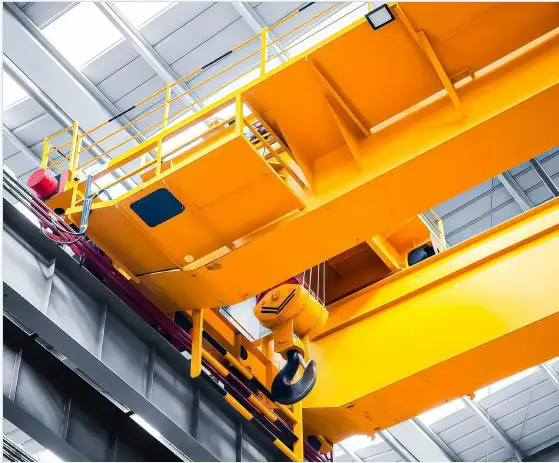
Portal Crane vs. Gantry Crane vs. Overhead Crane
While these terms are often used interchangeably, there are technical distinctions that matter for procurement and application:
| Feature | Portal Crane | Gantry Crane | Overhead Crane |
|---|---|---|---|
| Structure | Full portal frame with legs on both sides; often semi-portal (one leg on rail, one on building) available. | Similar to portal, but often smaller; typically full-span legs. | Bridge spans between elevated runways attached to building columns. |
| Support | Runs on ground-level rails or tires. | Runs on ground-level rails or tires. | Supported by the building structure. |
| Application | Heavy-duty outdoor applications (shipyards, ports). | Versatile; can be used indoors/outdoors for container handling or workshop use. | Strictly indoor or covered areas with strong structural support. |
Key Components of a Portal Crane
To understand the quality and capability of a portal crane, it helps to know its main structural elements:
The Bridge: The main horizontal beam that spans the width of the working area.
The Legs: The vertical supports that connect the bridge to the ground rails. These often have a bent (angled) design to allow for stability.
The Trolley and Hoist: The mechanism that moves along the bridge and performs the lifting.
The End Trucks: The wheel assemblies located at the base of the legs that allow the crane to travel.
The Rail System: The tracks on which the crane moves. For rubber-tired gantry (RTG) cranes, tires replace steel wheels for mobility without rails.
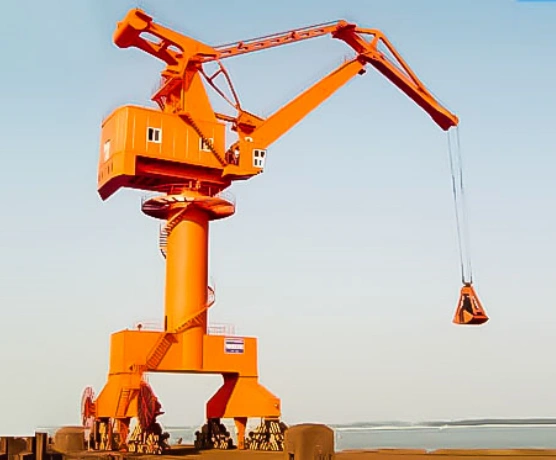
Types of Portal Cranes
Portal cranes come in various configurations to suit specific industrial needs:
1. Ship-to-Shore (STS) Cranes
Ship-to-Shore (STS) Cranes Found in container ports, these are the largest portal cranes. They feature an extended boom that reaches over the ship to load and unload containers.
https://www.zehuacranes.com/STS-Crane-loading-cargo-ship-at-port.html
2. Rubber-Tired Gantry (RTG) Cranes
Common in container yards, RTGs are mobile portal cranes that use rubber tires instead of rails. They offer high flexibility in stacking containers in large storage areas.
https://www.zehuacranes.com/RTG-Crane-stacking-shipping-containers-in-yard.html
3. Rail-Mounted Gantry (RMG) Cranes
These are similar to RTGs but operate on fixed rails. They are typically faster and more precise, used in intermodal terminals and high-volume stacking yards.
https://www.zehuacranes.com/Efficient-Rail-Mounted-Container-Gantry-Crane-in-port.html
4. Semi-Portal Cranes
A variation where one side of the crane runs on a ground-level rail, and the other side runs on an elevated runway attached to a building or wall. This is ideal for dockside loading where space is constrained.
5. Bulk Handling Portal Cranes
Equipped with grabs (clamshell buckets) instead of hooks, these cranes are used to move coal, iron ore, grain, and other loose materials.
Advantages of Using Portal Cranes
Why do industries choose portal cranes over other lifting solutions?
No Need for Heavy Building Structures: Since the crane supports itself, there is no need to reinforce the existing facility. This makes them ideal for outdoor yards or retrofitting old sites.
High Load Capacity: Portal cranes can handle capacities ranging from a few tons up to 2,000+ metric tons for specialized shipyard models.
Extreme Span Widths: They can span areas exceeding 200 feet (60 meters), covering large storage areas or dry docks.
Versatility: With attachments like grabs, spreaders, magnets, and hooks, a single portal crane can handle containers, bulk materials, and heavy machinery.
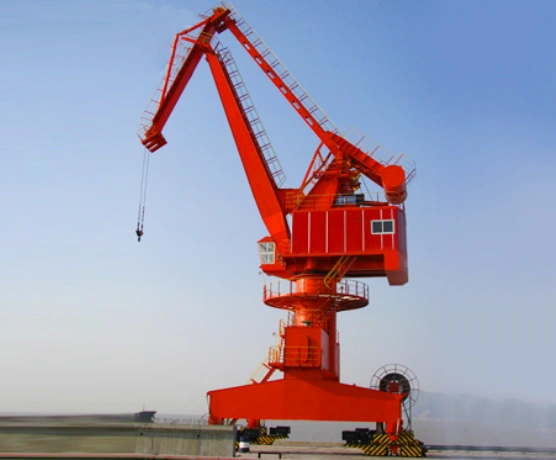
Common Applications
You will typically find portal cranes in the following environments:
Ports and Terminals: Loading/unloading ships and organizing container stacks.
Shipyards: Moving large ship sections, engines, and propellers.
Railway Yards: Transferring intermodal containers between trains and trucks.
Steel Mills: Handling heavy coils and raw materials.
Hydropower and Construction: Lifting heavy components for dam or infrastructure projects.
Safety Features and Modern Technology
Modern portal cranes are equipped with advanced safety and automation technologies to improve efficiency and reduce workplace accidents.
Anti-Collision Systems: Sensors prevent the crane from colliding with other cranes or structures.
Load Moment Indicators (LMI): These prevent the crane from tipping by alerting the operator when the load exceeds safe limits.
Automation: Many new RTG and STS cranes feature automated stacking and remote operation, allowing one operator to manage multiple cranes from a control room.
Wind Speed Anemometers: Critical for outdoor units; they automatically lock the crane when wind speeds become dangerous.
How to Choose the Right Portal Crane
If you are considering purchasing or renting a portal crane, evaluate the following factors:
Lifting Capacity: What is the maximum weight you need to lift?
Span: What is the width of the area you need to cover?
Lifting Height: How high do you need to lift the load?
Duty Class: Will the crane be used occasionally (Class A) or in continuous heavy-duty operation (Class F)?
Power Supply: Will you use a diesel generator (for mobility) or a cable reel system connected to the grid?
Conclusion
A portal crane is a cornerstone of heavy material handling. Its ability to combine massive lifting power with mobility and structural independence makes it indispensable for global trade, heavy manufacturing, and infrastructure development.
Whether you are looking at a massive Ship-to-Shore crane moving containers at a major port or a compact semi-portal crane unloading steel at a factory, the engineering principle remains the same: providing efficient, safe, and heavy-duty lifting without relying on building support.
ZEHUA is a leading crane manufacturer in China. With decades of industry experience, we have become a trusted partner in the global material handling solution field. We are committed to providing comprehensive professional services tailored to your specific needs. We recommend the most suitable crane products, offer accurate quotations, and design customized solutions. Welcome to contact us.
HENAN ZEHUA HEAVY INDUSTRY EQUIPMENT CO., LTD
Email: sale@zehuacranes.com
Website: [https://www.zehuacranes.com/]
Whatsapp:86-19562739544


