Ship-to-Shore Crane


Introduction
Technical Data
Application
Features
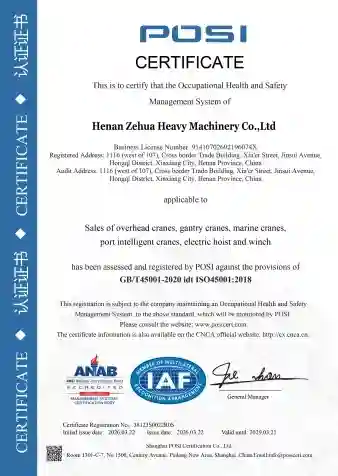
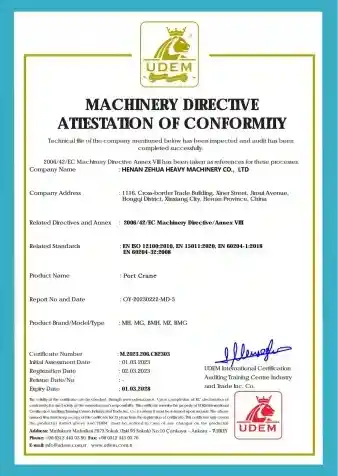
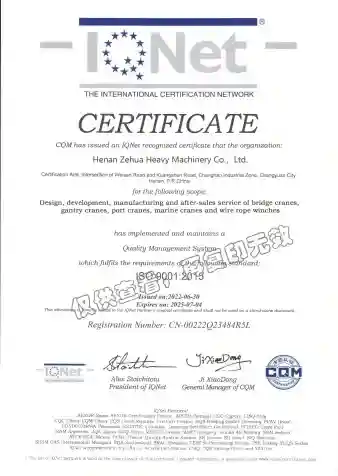
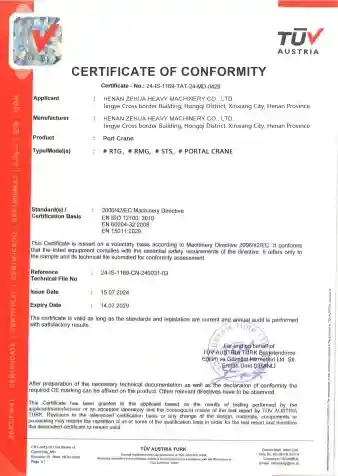
Certificate
Inquiry
PRODUCT INTRODUCTION
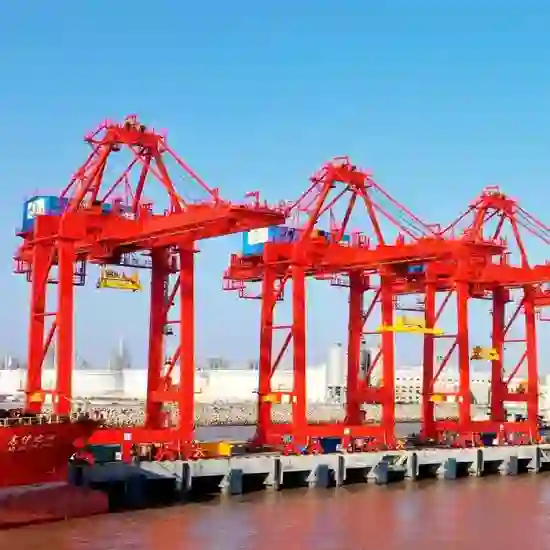
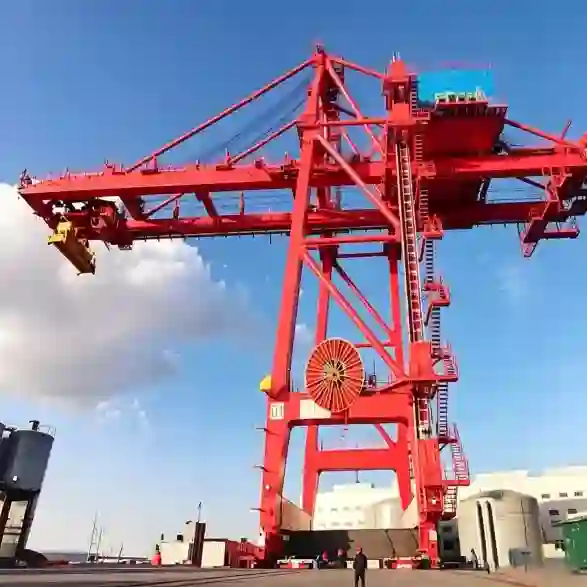
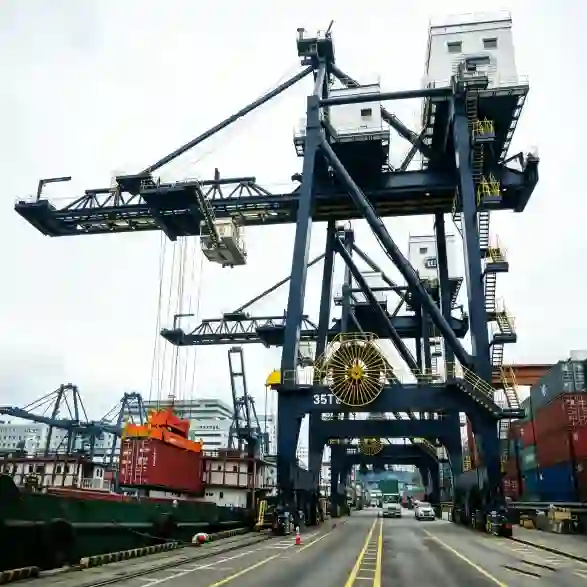
The Ship to Shore Gantry Container Crane (STS Crane), also known as a Portainer Crane, is the primary material handling equipment used at container terminals for loading and unloading intermodal containers from vessels. Engineered for high‑speed, high‑frequency operations, this massive steel structure spans the entire vessel beam and travels along rails parallel to the quayside, enabling efficient transfer of containers between ships and the terminal yard.With outreach capabilities extending up to 24 rows of containers across a vessel’s deck, they accommodate the world’s largest container ships, including Ultra Large Container Vessels (ULCVs).
TECHNICAL DATA
| Parameter | Specification | Parameter | Specification |
|---|---|---|---|
| Max. Lifting Height | 38m | Warranty | 1 Year |
| Video Outgoing Inspection | Provided | Rated Lifting Moment | Different |
| Span | 10.5-22m (customizable) | Place of Origin | Henan, China |
| Weight (KG) | 4580 kg | Application | Harbour, Container yard, etc. |
| After-sales Service Provided | Field installation | Material Specific Gravity (t/h) | 0.9~3.0 |
| Max. Front Outreach (m) | 20~55 | Rail Gauge (m) | 17, 30 |
| Wheel Base (m) | 12, 17 | Max. Lifting Load | 600-2500t |
| Max. Wheel Load (KN) | 200 | Capacity (t) | 16, 32, 55 |
RELATED PRODUCTS

APPLICATION
1. Container Terminal Operations Vessel Loading & Unloading: Handling containers from vessels of all sizes, from feeder ships to Ultra Large Container Vessels (ULCVs) exceeding 400 meters in length.Truck & Straddle Carrier Interface: Transferring containers directly to yard equipment (trucks, straddle carriers, or automated guided vehicles – AGVs) at the quayside.High‑Throughput Berths: Serving terminals with annual throughput exceeding 1 million TEUs, where rapid vessel turnaround is critical.
2. Automated & Semi‑Automated Terminals Automated STS Cranes: Operating in fully automated terminals with remote operator stations, optical character recognition (OCR), and laser‑based positioning for unmanned container handling.Semi‑Automated Mode: Allowing manual control for exception handling while maintaining automated cycles for routine vessel operations.
3. Twin‑Lift & Dual‑Trolley Configurations Twin‑Lift Operations: Lifting two 20ft containers or one 40ft container simultaneously to double productivity per crane cycle.Dual‑Trolley Systems: Separating shipside and landside operations with two independently moving trolleys, enabling continuous loading\/unloading without interference.
4. Heavy Lift & Project Cargo Oversized Cargo Handling: Equipped with auxiliary hooks or spreader beams to lift project cargo such as wind turbine blades, industrial machinery, an d heavy breakbulk items.Multi‑Purpose Berths: Used in mixed‑use terminals that handle both containerized and heavy project cargo.
5. Intermodal Rail & Barge Interface Rail‑Served Quays: Direct transfer of containers from vessel to rail wagons positioned alongside the quay, eliminating intermediate yard moves.Barge & Feeder Vessel Handling: Efficiently loading unloading smaller vessels at dedicated berths, optimizing feeder network connectivity.
6. Military & Naval Logistics Naval Base Operations: Handling containerized supplies, ammunition, and equipment for naval vessels with precision and security.Rapid Deployment: Supporting military logistics hubs where reliable heavy‑lift capability is essential for expeditionary readiness.